Feeling Alone After Experiencing Abuse

Have you ever felt like an outsider and does your gut feeling tell you, it might have something to do with the abuse, you survived?
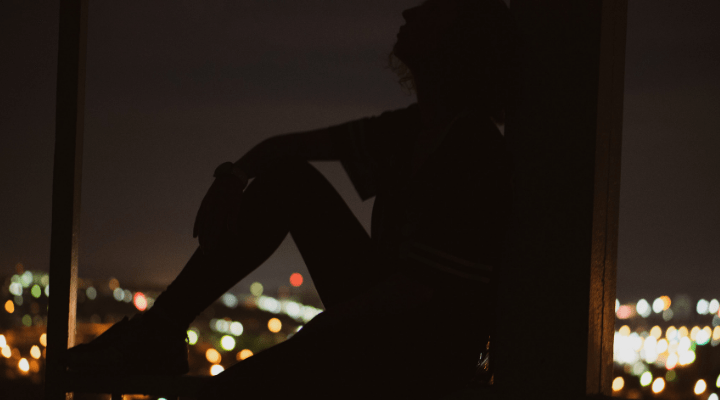
Loneliness can be real tough to cope with on the healing journey. Not only because you might  need to distance yourself from the abuser, but also because sometimes you might feel the need  to retract from the world. You need time to heal and you need time to find yourself again.

If you’ve been abused while growing up, you might have been ostracised by your own family and as a consequence felt like an outsider all your life. There seems to  be a vicious rule that when you’re the one being picked on, your surroundings get the impression that this is just the way you’re supposed to be dealt with – even if they are usually not abusive people at all. In a very twisted way, this even makes sense. If you do not pick upon the person, everybody else is picking on, you’ll become an outcast yourself. It is a survival strategy within social circles, like families, friends or a workplace.

For the victim it quickly becomes a self-fulfilling prophecy, a vicious circle and worst of all – it will become their  programming. It will leave them feel inadequate, worthless and alone.

Human beings are designed to socially interact and validate each other. It fuels our very being, our soul. We are social beings and being left outside of the circle is just not a healthy option. 

Some therapist would say that you need to give that validation to yourself. This is true, of course. But I’m sorry, I just don’t believe we can survive a lifetime just doing that –  we need to validate ourselves for sure, but we also need to surround ourselves with good (in the truest sense of the word) and loving (again, in the truest sense of the word) people, who are willing to support us. 

If you are denied the support, the love or in some cases the bare recognition of your existence, your soul will inevitably suffer.

Once this false and horrible programming has been induced, our experience will be pretty much the same, everywhere we go – school, work or social gatherings. It doesn’t really matter where and when it started, as long as you believe in the message that you are the proverbial black sheep and that you don’t deserve to be part of the team. 

In turn, abusers will sense that about you and knowingly or not, they will sniff you out as someone ready to be abused. The bully at school just as much as your narcissistic co-worker or your psychopathic boss. You may figure out decades later, that your childhood friend has not invited you to certain gathering on purpose, just to keep you out of the loop. Or you may come into the office saying good morning to everybody and get no response whatsoever. They will just ignore you, because that narcissistic co-worker has been talking badly about you and now they believe that you are an awful person. 

You might ask the professor a question, after a lecture at your university and have them brush you off, because that fellow psychopath student has a personal relation to them and has been talking smack about you. People often just don’t realise that they are being manipulated.

It could really be anybody ostracising you, while you are left out in the cold, having no idea what you’ve done to deserve this. 

It is a technique abusers use on top of the initial abuse, to keep you isolated. It is, of course, abusive in itself to intentionally and under handedly put someone in the position of an outsider. 

And then the vicious cycle starts. You feel like an outsider and that you don’t really belong – anywhere. You may develop a need for solitude in the disguise of peace and quiet, as people don’t seem to want you being around anyways. 

If you were the scapegoat in your family, part of the abuse might have been that your feelings were never validated. When you needed help or support  you were ignored. At a family reunion, you would be the only one not included in all the fun and chatter. But again, there are unfortunately many other settings like your workplace, school or circle of friends where this might happen to you. And it can get to a larger scale, where you just don’t feel accepted by society as a whole. 

That’s when it might become your own choice to retreat to find your strength again. You seek solitude, because you might be scared to burst into tears publicly at any time, if triggered. You become doubtful about who you are and even question your right to exist. 

So, if you have a background like this – be it your upbringing, school, work or your circle of friends etc., it is really important to find a new family. Don’t lock yourself away – I have done that for sure and it made things worse. It is better to look out for those good people and they are to be found everywhere, just like the abusers. I promise! 

If you don’t feel like you can connect to people at work or school, you can find support groups online, you can join meet-up groups or talk to a therapist. This may not sound like much, but  it is a start. It is the first step into your new life. I know from personal experience that it will help you cope. And more and more you’ll be able to attract a new circle of people, who will be there for you just like you will be there for them. 

Because you deserve it, you deserve better, you do deserve to be a part of life! You are worthy, you are loveable and your existence matters!
Toxic Shame

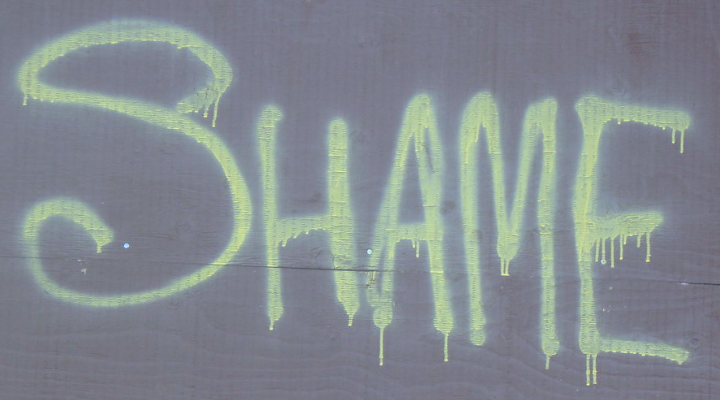
Every time I fail at something, every time I don’t get a job, a relationship breaks up or even when I just drop something on the floor – I feel like the biggest failure on the planet and like my right to exist has been forfeit a long time ago.

For someone who has never experienced it or even for those who have, toxic shame might be a very strange concept to grasp. Yet once it has its claws on you, it won’t be easy to shake off. 

Usually when we feel shame or guilt for that matter, it does make sense.  We say or do something, that we instantly regret.  We feel bad, because the consequences of our actions hot us.  We ponder, we learn, we grow and try to do better next time.

Toxic shame is very different from that. It not only means to feel ashamed of something that is not even your responsibility to begin with, it also means feeling a profound shame of who you are.

This means, if you feel toxic shame you can never find peace,. If you’re not fighting the battles of everyday life,  you’ll find yourself fighting yourself – hence it is unnecessary, self-destructive …TOXIC! I am certain that way too many people must be out there experiencing toxic shame. 

One of the most bizarre and probably saddest examples are people who have been sexually molested in childhood. Think about this for a second:  a person rapes a child, may get away with it or find the right attorney, therapist or friend who will convince them and the world that it isn’t really their fault.  After all they have been abused by someone as well, right? 

Yet, the molested child will experience shame all of their life. Due to their shame,  they maybe never even be talking to anybody about what happened to them when they were way too young to process.  They’ll feel responsible, they’ll hate their body, they might reject their sexuality all together, never feel like they belong and most importantly  they won’t love themselves.

This is a horrible concept, but it is just one example. Many survivors of all kinds of childhood or later in life abuse experience toxic shame. I have heard some experts explaining it as taking on the shame of your abuser.  You basically absorb it, so they don’t have to feel it.  Of course many times an abuser will also gaslight and guilt trip their victim into taking on the blame and shame. Think about the depths of unfairness here.  

But no matter where it stems from, toxic shame will leave the survivor in a constant state of anxiety. It will leave them with an inner critic who will never ever shut up.  Toxic shame can make you do crazy things, like unexpectedly lashing out at somebody, think crazy thoughts, like “I am unlovable” and even make you suicidal.  

Here is, how I came to see it:  Any everyday life situation may trigger you to remember the abuse you have faced at some point in your life, but often on an unconscious level. Therefore, what you actually remember and relive aren’t the hard facts but this deep feeling of shame within yourself.  And BAM, it will be right back radiating from the core of your being, leaving you feeling worthless. 

We often do not recall the abuser or the actual act of abuse, maybe because it is someone so close to us that our conscious mind does not want us to go there. We want to protect them, or at least our image of them. This can even happen when you remember the abuse consciously. For some reason we seem to be more comfortable dealing with our own toxic shame and its ugly consequences, than blaming the people who maybe really should be ashamed of themselves. 

So what can you do? If you’re still with me at this point, you probably have experienced toxic shame yourself   or you have someone close to you, who has. 

The good news is that healing is absolutely possible. The not so good news may be that it will hurt, because you will have to get to the root of the cause and make sure that you put the shame back where it belongs. This doesn’t mean that you’ll have to accuse someone publicly, take revenge or even force yourself to forgive them – forgiving is a great and beneficial thing, but it takes time. 

This is about you. So please, don’t be so hard on yourself. That’s what you’ve been doing for way too long anyway.

Find out where this feeling came from, what happened and try to remember all the loving people you’ve also met in your life. They didn’t deem you to be worthless. They appreciated who you are. Have some of them be there, when you remember.  You can find a good therapist. You can go to YouTube and connect with people in the same situation. 

I recommend to check out YT channels like Peace and Harmony, Lisa A. Romano, Inner Integration and the work of public speaker, counsellor and author John Bradshaw.

As always, please know that you are not alone with this. Please know that I applaud your courageous soul for surviving whatever you have been through. You have come this far. You can do this. Most importantly, you are worthy, you are lovable and you do deserve better!

The Female Psychopath

The Underrated Threat

Women are often labeled as being soft, nurturing, always kind and supportive.

Since patriarchy has been on the rise for some time now, these overly generalised notions about our gender get a lot of support. The layers of misogyny are deeply interwoven in today’s society and it gave classic Feminism a major comeback over the last few year. It often may feel like women have been pushed in a permanent one-down position: we usually don’t earn the same, we are often pushed out of opportunities of any sort, we’re being belittled and objectified.

However, when it comes to abusing fellow human beings this generalisation of women as being the all time victim might be dangerous. We forget the female interspecies predator – the female psychopath. 

Whether it is a co-worker trying to disrupt your chances for a promotion, a best friend who has been sleeping with your boyfriend behind your back, while slipping in comments about how unattractive, unworthy and hopeless you are or the mother, who would molest her own son. Just like with all other abusers the severity of their attacks may differ. However, the female psychopath often manages to avoid detection. They will officially support your promotion but backstab you covertly. They will tell the world that you are their best friend and how they’d never hurt you, while enjoying your discomfort when they tell you in private that you really should not wear skirts with your legs and how sorry they are to inform you that your boyfriend might be cheating. And should  their qualities as a mother be questioned, they will start crying on cue and still touch their child in an inappropriate way behind closed doors. 

They will leave those invisible scars on their victims.

Our perception of the common narcissist or psychopath, especially through the media is dominated by their male versions. Psychology itself has largely accepted the notion that female psychopaths are way less common than their male counterparts. However, there is simply lot more data on male psychopaths, because they will end up in prison more often. Psychologists, therefore, seem to  have a tendency to label the female psychopath as a narcissists. 

They are simply much harder to find out. But nevertheless, statistics suggest  that one in a 100 people may be a psychopath and that, of course, includes women.

Their  abusive behaviour is usually more emotional than physical but the cold hard truth is that they are not  in any way to be considered less dangerous than male psychopaths – because they have no conscience. 

This is a vey hard concept for us to grasp, but you simply cannot assume that your way of thinking and feeling can be applied to them. Unfortunately, the prevailing dogma in society is that a woman is not truly capable of violence, coldness and heinous acts and this makes the female interspecies predator particularly dangerous. When their victims eventually figure out what is actually going on, it is often too late and the damage is done.

Just like their male counterparts, the female psychopath is superficially charming, manipulates while being free from empathy for their victims, loves a power play and relishes in observing the agony they leave their victims in. They wear a mask in every social interaction, even when they are with people close to them which allows them to seem normal. Their aggressive behaviour is usually way more covert and underhanded than that of the male psychopath. They have the stamina to go for the long haul and wear their victim down slowly. They will fake emotions and use sex to get a rich husband and have several lovers on the side. They have no restraint whatsoever abusing their own children in every possible way – they have no feelings for them. They will gaslight and triangulate their entire family and play each member like a puppet-master. 

Everyone who crosses paths with them will be forced in a one-down position and if you don’t go there willingly they will shame you, bully you and destroy your reputation by spinning a web of lies that you’ll only notice when it is too late. Often you lose people along the way, because others simply do not believe you.

Female psychopaths are extremely skilled in feigning emotions – those crocodile tears come easy to them. Like the male psychopath they study people and learn to mimic the appropriate reaction to all kinds of situations. Their performance is Oscar-worthy. And maybe because a little cattiness in women is often regarded as sexy and desirable, people don’t tend to see through the mask.

However, this mask does fall occasionally. This is your chance to see what’s really going on. When they feel unobserved they will stare at you with cold, emotionless reptilian eyes. And then you might start to notice, how they often seem to be overly sexual in very inappropriate situations, how emotionally unstable they are and how they can seem so heartbroken over something in one moment and be so joyful half an hour later.

Your best chance, however, to uncover a female psychopath is to react contrarily to their expectation. If they feel like they have miscalculated you or worse that you have stripped them of  their power and control over you – you will see a very different character.

Once you are on to them, you will notice more and more that there is something unsettling about them you cannot quite put your finger on. 

Please do not ignore those signs or your gut feeling and please be careful. 

These women can be downright dangerous and while their abuse may be more emotional – which is of course devastating enough – they are not above physical violence to get their way. 

Trauma and Thoughts about Suicide

Never give up; and never, under any circumstances, no matter what – never face the facts. 
Ruth Gordon 

This is a topic people try to avoid discussing, whether they ever had thoughts about suicide themselves or they know someone who might be at risk or worse have lost somebody to it. It is just too dark and sad, too inconvenient – there is a stigma.

It does not help that in our society, people who try to commit suicide are often being treated worse than those who kill someone else. They often get locked away, drugged heavily and shamed by friends and family. The question often is “How could you do this to us?” rather than “Why would you do this to yourself?”

Please don’t get me wrong, it is indeed very hard to witness a loved one commit suicide and to conceive why they would just give up on life. Why would they go through such lengths, seemingly to hurt the ones they leave behind. Please know that it is most likely not their intention to hurt you. They simply do not know how to go on. Whatever they went through, nobody else will ever know what it was like or spent the hours they lay awake at night thinking about how to get through it.

For the lucky ones who have never thought about suicide, It is very hard to understand what it feels like. So, it is almost impossible for someone on the outside to find the right words and help a loved one in that state of mind. This is why I think it is so important to talk about this. 

If you know somebody at risk, please do not judge them. They’re probably already feeling guilty.

The feeling that might describe it best is that it’s an insidious mixture of pain and hopelessness, which if it gets too powerful might just take over your mind and tip the scales. The pain is caused by whatever happened in your life that got you to that point, while the hopelessness derives from the believe that things will never change. 

Like a lot of survivors of childhood abuse, I’ve struggled with suicidal thoughts almost my entire life. I also tried once to end my life, but somebody found me before it was too late. I was only a teenager back then, however it wasn’t a cry for help – I really wanted to die. But more importantly, I am glad today to still be around.

Years ago, I was in a particularly bad phase:  my boyfriend had left me, I’ve had a miscarriage and I lost my job. It was a lot  to take and I had no idea how to ever regain my energy. Christmas was coming up and the holidays always seem to make such a situation worse. Out of despair, I turned to a charity institution. I was lucky and found a good and trustworthy therapist. So, here I was with this professional, yet I was ashamed to admit it was just too much for me and that I had thought about taking my own life to make it stop. I thought, if I admitted  to it now he would have me locked away. I knew about the stigma of being weak and cowardly that surrounds the idea of suicide.

Turned out that guy was really good at his job, I didn’t have to say anything. He knew it and he brought it up. And while I got deep into defensive mode, his response couldn’t have surprised me more. He said:

After everything you’ve been through, it wouldn’t be normal for you not to think about it…

And there it was. The simple truth. It was nothing to be ashamed of, it was a natural reflex. 

Everybody is different in how much they can take. I think a huge part of my shame was me thinking about all those people on this planet who have it way worse, than I ever did. And sadly, they are out there. But this is certainly no competition. 

So, if it feels like it is all just too much and you’re thinking about killing yourself do not give in to guilt or shame. Know it is a natural response to your pain, just don’t go through with it.

…but please don’t do it: 

It took me a long time to understand what Ruth Gordon meant. But I think, I figured it out eventually: the facts do not matter, because they are constantly changing. Your situation seems desolate right now, it might seem that there is no solution to it, but things are always in motion. Those facts will change and they might just change in your favour. 

Look at all the incredible real life stories out there about how people’s luck would change, when they’re least expecting it. Miracles can and do happen and that is a fact.

Suicide is not easy, it takes a tremendous amount of energy and dedication to go through with. So, why not put that same amount of energy into making changes to your life. It is never too late for a fresh start, a new career, relationship or adventure, as long as you’re still breathing.

Even if you’re an atheist or not sure what to believe in, nobody can be certain about what is going to happen after we die. What if karma is a thing after all or if you just would reincarnate again immediately. You would need to learn all the things you already know and could use now, from scratch. 

Most importantly, there are people out there who can and will support you on your personal journey. You are not alone.

Life can be unbearable at times, but your existence, your dreams and hopes are worth fighting for. Your beautiful soul is needed in this world and as Aragorn said in The Lord of the Rings: There is always hope!

why it is so hard to leave your abusive family

Go confidently in the direction of your dreams! Live the life you’ve imagined.

Henry David Thoreau

Blood is thicker than water, right? But if you grew up in an abusive environment, if you’ve been the black sheep in your family (and maybe never even knew why), if you’ve been bullied by your siblings or molested by a parent – this good old saying may just feel like a knife in your heart.

If that is you, you might have read some books, listened to podcasts or watched some of the numerous YouTube channels that deal with the matter. One message you will hear repeatedly: go no (or at least low) contact.

Considering that most people are not willing to change their behaviour, especially an abusive and manipulative character, this seems like good advice. It might be necessary to leave that job with the narcissistic co-worker, the relationship where domestic violence is the order of the day or the circle of friends, where you’ve never been more than an outsider.

However, leaving any of those situations above might be easier said than done. You might need that job to feed your kids, you might be so scared that you’ll never find love again or you might be afraid of having no one to talk to in the end. Abuse is a sneaky thing, too. Once you’ve realised what is happening, it might have been going on for so long, you no longer see a way out. Not easy to say: no more!

But when it comes to family, the abuse whatever it was has probably been going on since you were a child. Remember what that was like? You had no choice, but to assume that what the adults are doing (or tolerating) must be the right thing. Because if it wasn’t, they wouldn’t – they were adulting after all. Children are expected to adapt to the world while growing up and that starts with the environment, we grow up in.

Wrapping your head around the concept that the people who are supposed to be closest to you and love you simply for who you are, could rape, neglect or physically and emotionally abuse you seems almost absurd. But when you’re realising that these kind of things actually happened in your family – it simply hurts like hell! And you don’ want it to be true!

The evidence is there, but then you remember the happy cozy times, like Christmas or movie night…so maybe it is all just you? It wasn’t that bad? The constant change between the good and the bad times, the I love you, I hate you: it is part of the gaslighting, it is part of the abuse and often done with the intend to make you feel crazy. So, your abuser would take breaks, play nice, get you gifts or drive you to school? That doesn’t make all those times of humiliation, emotional torture and disrespect OK.

Unfortunately, the rest of the family (maybe there is even more than one abuser) would often look away, deny or even assist in the abusive behaviour. Not everybody has the clear sight, the courage or the guts to change a system that might have been established over generations. It is their prerogative. If they do not want to look, you cannot make them.

But you can make your own choices. I know it hurts, I know you might be scared of the loneliness. But you’re not alone! There are many people facing the same circumstances who take that leap of faith. It is never too late to start a new life and find the tribe that has your best interest in mind and heart!

And who knows, sometimes people do come around. Maybe if you give it time, there might be some relative, who will eventually see through the deception and understand. And then you can break the cycle of abuse that might have been going on for ages, together.

Don’t let anybody hold you back…you deserve the life you’ve imagined!

The Courage of the Survivor

Abuse does not discriminate. No matter what the colour of your skin, your hair, your age or your gender may be, whether you are rich or poor, you might have been abused as a child or later in life. And just as the victims of abuse come in all shapes, so do the abusers. They can be lovers, friends or family and they can and will go to different lengths to torture you. Whether they are aware of it or not.

Survivors need courage more than anything else

We have kind of agreed on the term survivor for victims of narcissists, psychopaths and other manipulators. That seems fair enough. You should be proud to have survived the agony, you’ve been put through. Surviving anything implies a certain kind of strength. This survivor’s mentality will be helpful in making sure that nobody will ever be able to hurt you like this again. However, I believe that it is important to remember that we are also victims. And a victim who wants to overcome that state of being needs courage.

When we think survivor, we often relate that term to strength. But when we consider the journey a survivor has to take to even find their strength, there is that term again: courage.

When reality hits, when we suddenly see the abuse through our parents or caregivers clear as day and we acknowledge, in how many abusive love relationships we followed that co-dependent pattern. When we realise, how this one co-worker always takes advantage of us, no matter how exhausted we are or how a lifelong friendship has always been a oneway street … it feels like hitting a brick wall, head front. We were left alone, ostracised and at the same time, the abuser took all we had to give. It doesn’t feel like strength at all.

If you are a survivor of sexual, emotional, physical or any other kind of abuse, my heart goes out to you. The pain you felt and most likely still feel today, doesn’t compare to anything. You deserve admiration and acknowledgement for going through this and surviving!

But this also means that you found your courage at some point. You had the courage to walk away, to confront, to change and to start over. You had the courage to realise:

No one has the right to hurt you, simply because they can.

No one has the right to hurt you, because someone hurt them too.

No one has the right to put you down, just because they crave control more than anything.

No one has the right to tell you to be different, just because they are not happy to accept you the way you are.

You faced the truth, you changed, you walked, you started all over – you have courage. If you are in the process of breaking free – you have courage. When the flashbacks make you cry and cringe inside, but you still carry on – you, my friend, have courage!

Never forget how awesome you are, brave souls…the world needs your courage!